The Science
Science paints a clear picture: Climate change is happening; it is caused mostly by humans; and it creates many serious and damaging effects. The primary cause of climate change is human activities – like driving cars, creating electricity, and cutting down forests – not natural changes in the climate. These human activities release gases into the atmosphere called greenhouse gases, which slowly warm the planet, creating climate change.
The climate is very complex, and there are still some things we don’t know about it. But through centuries of studies and experiments, we’ve been able to create a strong understanding of how the system works, and how humans are changing it.
The Greenhouse Effect
Imagine a greenhouse made of glass used to grow plants, like flowers and vegetables. The greenhouse keeps the plants inside warm even when it’s cold outside because it traps heat from the sun. The earth’s atmosphere acts like a greenhouse: When light from the sun passes through the atmosphere, some of it is absorbed by the Earth’s surface to heat it, but some heat is also trapped in our atmosphere by certain gases. These heat-trapping gases are called greenhouse gases, and they act like a blanket, keeping the earth warm. This greenhouse effect is a natural process that makes the planet comfortable to live.
But human activities are increasing the amount of greenhouse gases in our atmosphere. One type of greenhouse gas, carbon dioxide, has reached a level in our atmosphere that the Earth hasn’t seen for more than 400,000 years! Plants, soils, and the ocean can absorb carbon dioxide, but they can’t keep up with all the extra greenhouse gases that we have been releasing. And some greenhouse gases stay in the atmosphere for a long time, from hundreds to even thousands of years. All these gases are making things hotter than natural, so we need to stop producing them to avoid climate change.
The Greenhouse Effect Explained
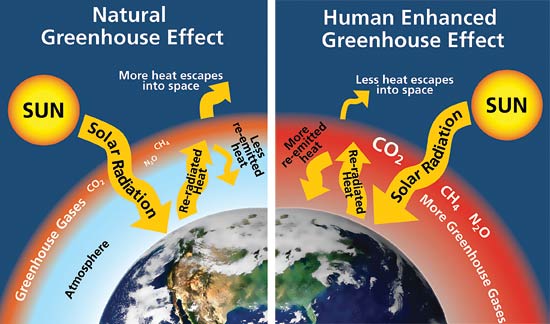
Up until about 150 years ago, humans did not produce many greenhouse gases. That changed as the human population grew, we cut down forests to make way for cities and farms, and important inventions and technology, like in-home electricity and cars, transformed the way we live.
These inventions and technologies need energy. Some types of energy called fossil fuels — like coal, oil, and natural gas — have become important sources of that energy. Burning fossil fuels releases carbon dioxide and other greenhouse gases into the atmosphere. We call the release of these gases emissions.
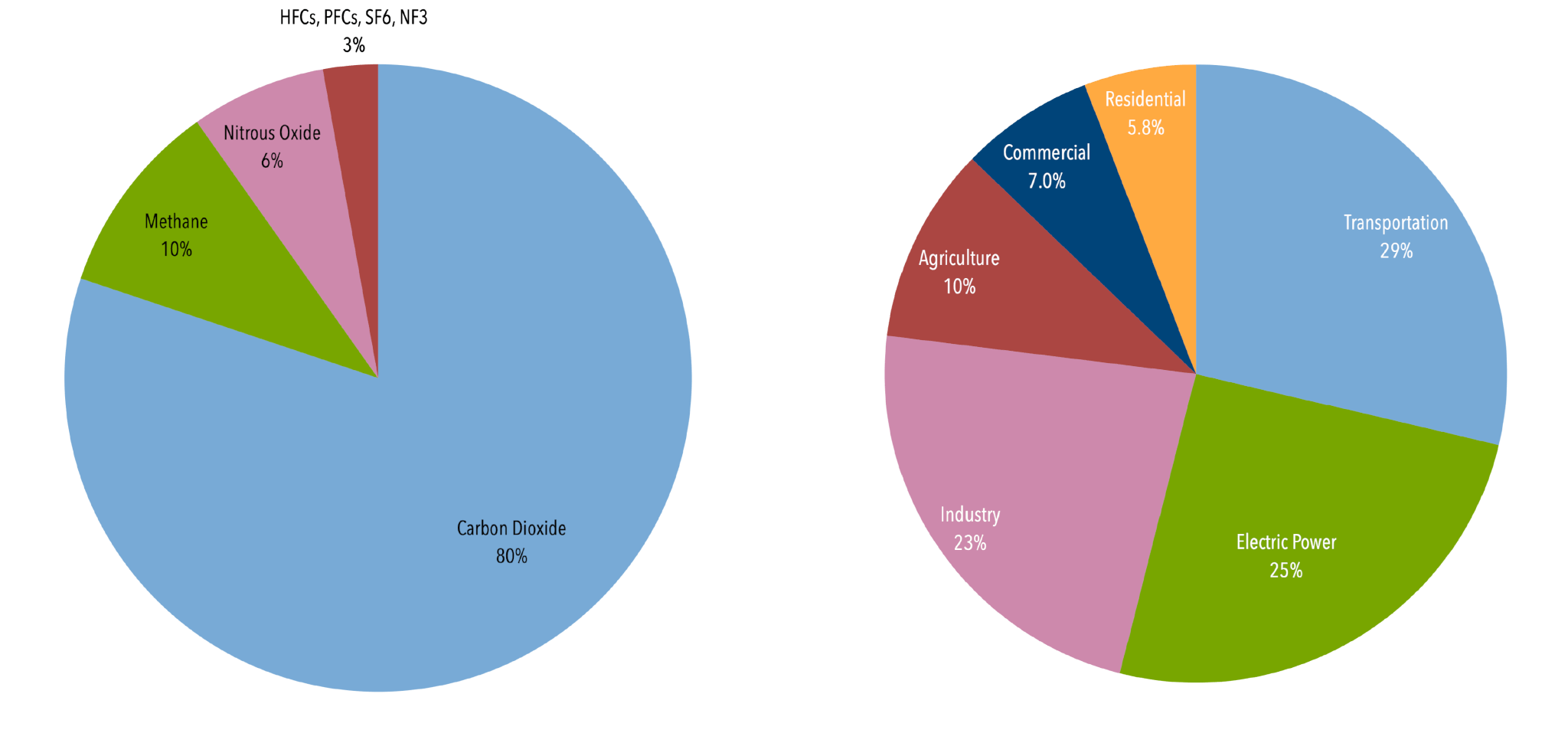
Today in the United States, electricity and transportation (cars, trucks, and planes) are responsible for almost 60 percent of greenhouse gas emissions. The rest comes from agriculture, industry – such as factories that make products we use – and from energy we use in our homes and businesses.
Learn more about U.S. greenhouse gas emissions here.
Greenhouse Gases
The most common types of greenhouse gases are:
- Carbon Dioxide (CO2): Carbon dioxide is the most common greenhouse gas created by human activities. It makes up 80 percent of U.S. greenhouse gas emissions. Most carbon dioxide enters the atmosphere when fossil fuels (oil, natural gas, and coal) are burned for electricity and transportation, and because of other processes like making cement. Carbon dioxide is removed from the atmosphere and stored when it is absorbed by plants, soils, animals, and the ocean as part of the carbon cycle.
Learn more about how energy emissions are controlled in the United States.
- Methane (CH4): Methane is the next most common greenhouse gas emitted by human activities. It makes up 10 percent of U.S. greenhouse gas emissions. Most methane emissions come from raising livestock (like cows), but methane is also released when coal, natural gas, and oil are produced and transported, and when organic waste (like food) decays in landfills. Methane is a stronger gas than carbon dioxide, meaning it creates more warming, but it stays in the atmosphere for a shorter time.
Learn more about how industrial greenhouse gases like methane are controlled in the United States.
- Nitrous Oxide (N2O): Most nitrous oxide is emitted by agricultural activities, like applying fertilizer, but it also comes from industrial activities, burning fossil fuels, and other sources. It makes up 6 percent of U.S. greenhouse emissions. Nitrous oxide is even more powerful than methane and carbon dioxide at warming the atmosphere.
- Hydrofluorocarbons (HFCs), Perfluorocarbons (PFCs), and Sulfur Hexafluoride (SF6): Try saying these gases three times fast! They’re called “fluorinated gases” for short. These gases combined make up only 3 percent of all U.S. greenhouse gas emissions. That may sound small, but they are very important to solving climate change because they stay in the atmosphere for a very long time (sometimes for thousands of years!) and are much more powerful warmers than all other gases. These gases are made by humans and are used to cool our refrigerators, freezers, buildings and cars.
U.S. Greenhouse Gases by Gas Type and Sector, 2019
Impacts of a Changing Climate
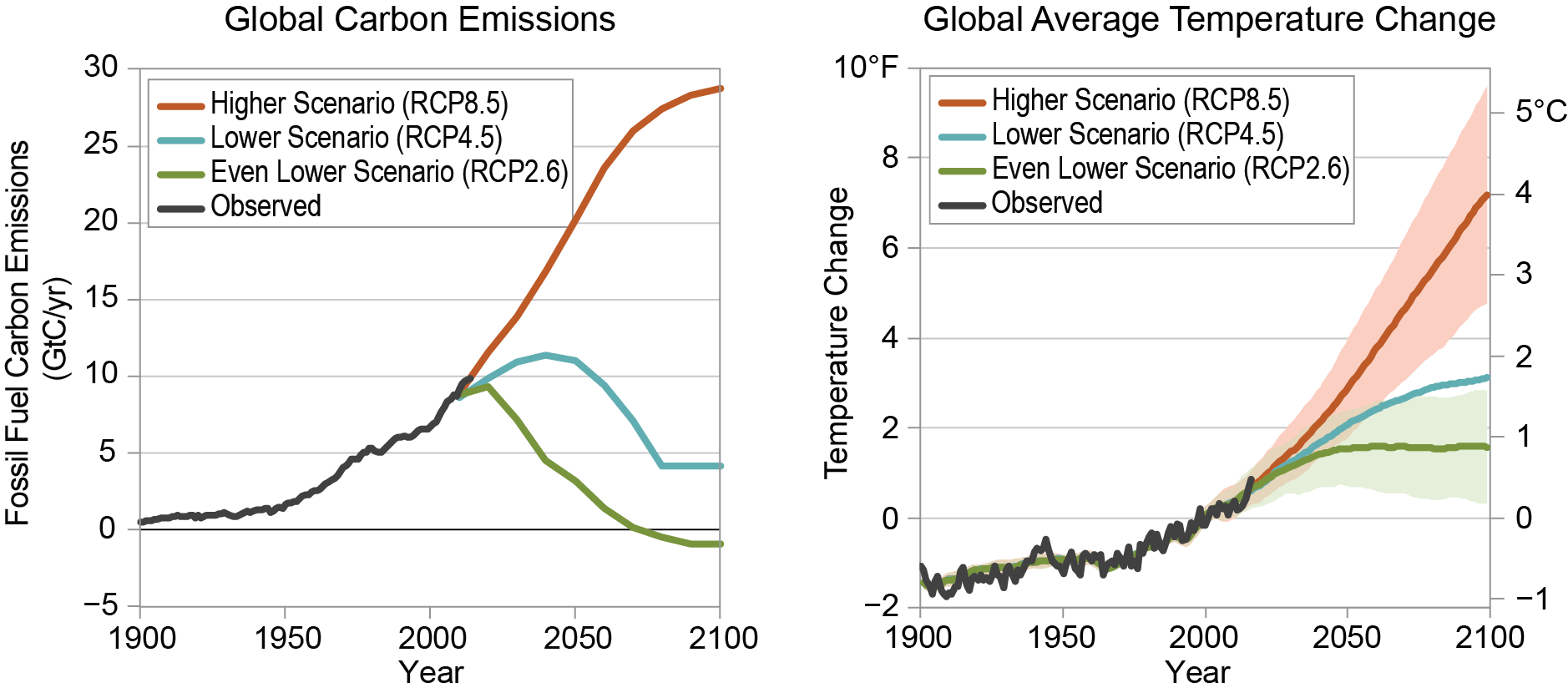
Because of increases in greenhouse gas emissions, global temperatures are rising. Each of the past four decades has been warmer than the previous one. 2016 and 2020 were the warmest years on record, and the six warmest years have all been since 2010.
Learn more about the relationship between extreme weather and climate change.
The following charts show how emissions and temperatures have gone up since 1900, and how they could continue to change in the future. If we continue to emit more and more greenhouse gases, the temperature of the Earth will rise a lot – maybe as much as 5 degrees Celsius (9 degrees Fahrenheit) by 2100. Even if we reduce our emissions right now, the temperature of the Earth will still rise slightly, but we might be able to keep the rise below 2 degrees Celsius (or about 4.8 degrees Fahrenheit). Two degrees might not sound like much, but scientists agree that even that small amount of warming can have large impacts on humans and the environment.
Past and Projected Changes in Carbon Emissions and Temperature
Rising global temperatures affect many things, like extreme weather, human health, food supply, and ecosystems. These impacts are already being felt today, and groups like the poor, elderly, and others are especially vulnerable.
Impacts of climate change include:
- Heat waves. Heat waves are long periods of time with temperatures that are hotter than normal. As the Earth warms, more areas will be at risk for hotter and more common extreme heat waves. Learn more about the link between climate change and extreme heat.
- Heavy precipitation and storms. Heavy precipitation – like rain or snow – is becoming more common in many locations, which can lead to flooding and other dangerous weather. As seas warm, coastal storms like hurricanes are also becoming more frequent and damaging. Learn more about the link between climate change and heavy precipitation and hurricanes.
- Sea level rise. Sea levels have risen about 8 inches since 1880 because glaciers and ice sheets are melting and seas are warming. Scientists predict that, with 1.5 degrees Celsius of warming, sea levels could rise by as much as 1.8 feet this century, which would harm communities living on islands and near coasts. These rises could be even higher if glaciers in Greenland or Antarctica melt very quickly.
- Threats to habitats and animals. Warming temperatures, rising seas, melting ice, and other impacts of climate change can threaten the habitat of many plants and animals. Some species are moving to new habitats, but others may struggle to adapt and become endangered or extinct.
- Ocean acidification. Extra carbon dioxide in the atmosphere is absorbed by the oceans, making them more acidic. This can make it difficult for corals and organisms that form shells to survive, which can create problems in the food chain for other sea animals.
- Wildfires. These are fires that burn large amounts of forests and brush. When they are not controlled, wildfires can destroy homes and be deadly. The number of large wildfires and the length of the season when they’re most likely and threatening have been increasing in recent years. Find out how climate change will worsen wildfire conditions.
- Drought. A drought is a period with little rain and not enough water. Global warming will increase the risk of drought in some places and make it harder to grow food. Learn about the links between climate change and drought.
No comments:
Post a Comment